House of Representatives Pushes for Urgent Shift to Low-Carbon Economy
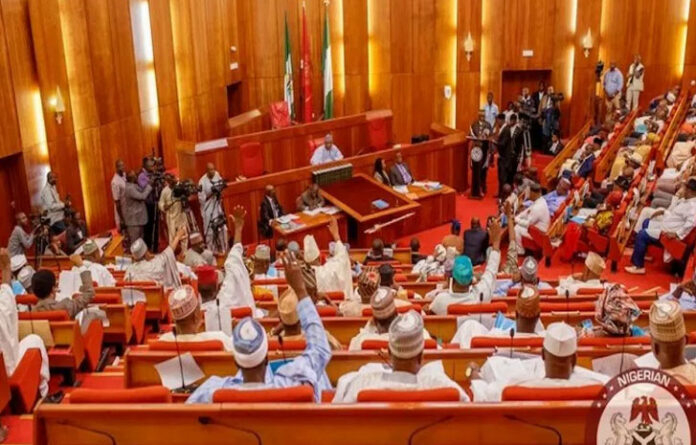
Nigeria's House of Representatives is calling for immediate and coordinated action to accelerate the nation's transition toward a low-carbon economy as climate change impacts intensify across the country.
Speaker Tajudeen Abbas made the appeal during a National Decarbonisation Technical Roundtable convened by the House Ad-hoc Committee on the Mandatory National Decarbonisation Programme on Thursday.
Abbas emphasized that climate change is no longer a distant threat but a present reality affecting Nigerian communities through severe weather disruptions. He highlighted the diverse regional impacts—drought and desertification in the north, rising temperatures in the west, flooding and erosion in the east, and irregular rainfall patterns in the south.
The Speaker cautioned that failure to act decisively could have catastrophic economic consequences. According to global estimates, climate inaction could cost Nigeria approximately 30 percent of its Gross Domestic Product by 2050—equivalent to roughly $460 billion.
Abbas stressed, however, that Nigeria's decarbonisation agenda should not be viewed as a threat to the oil and gas sector, which remains vital to the economy. Rather, he framed the transition as a strategic opportunity to diversify the economy, develop competitive green industries, and attract investment aligned with global climate standards.
Wangari Muchiri, director for Africa at the Global Wind Energy Council, underscored the economic potential of decarbonisation, noting that the global shift toward cleaner energy creates opportunities for job creation and investment in sustainable sectors.
Lawmakers disclosed that the federal government has already approved a National Carbon Market Framework projected to generate between $2.5 billion and $3 billion annually over the next decade. The framework will establish protocols for carbon credit verification and encourage emission-reduction projects across forestry, renewable energy, and climate-smart agriculture.
The House Committee chairman, Hon. Sesi Whingan, stated that the National Assembly has already enacted key legislation supporting climate transition, including the Climate Change Act of 2021 and the Electricity Act of 2023.
Share this article:
Latest News
- Saraki’s 10-Day Stay in Kwara: A Blend of Faith, Charity, and Hands-On Leadership Read more...
- 12 States Sign On: Nigeria’s Push to End "Nuisance Taxes" Gains Steam Read more...
- Dele Momodu Warns of One-Man Ballot in 2027, Slams FCT Election Conduct Read more...
- National Grid Slumps Under 4,000MW as Gas Shortage Hits Critical Levels Read more...
- Academic Excellence Pays Off: FG Unveils N5m–N20m Awards for Top Student Research Read more...